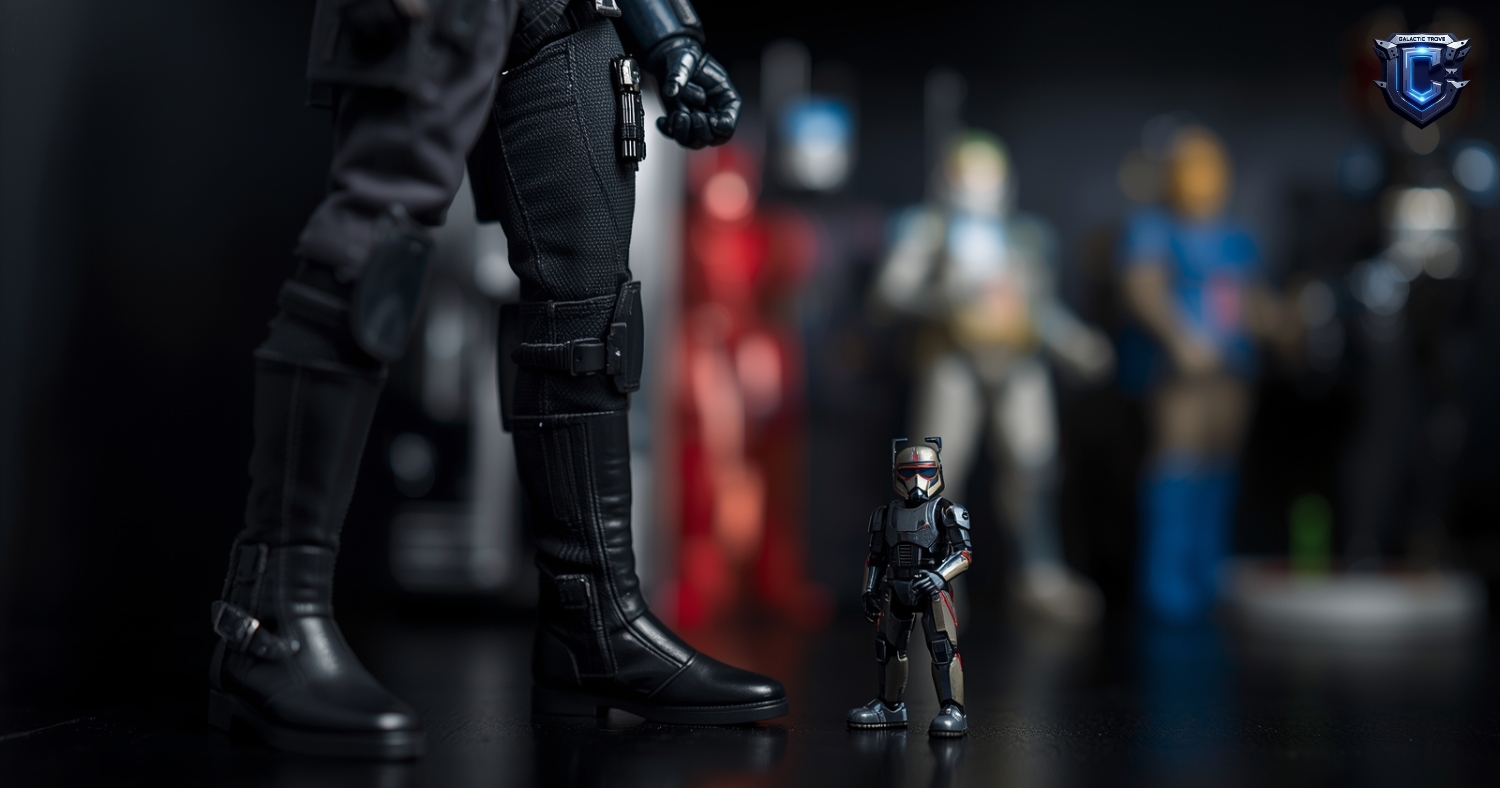

Model Scale Meaning is the secret fractional code (1:X) that governs every collectible, determining its size, detail, and visual impact. If your display shelf is a mess, you must master the Scale Law immediately. This Ultimate Master Guide details the 5 Core Rules you need to understand. Mastering these rules helps you avoid Scale Clash and elevates you to a Strategic Collector with a cohesive, professional collection.
I. Rule 1: Understanding the Fractional Structure of Scale (The Human Baseline)
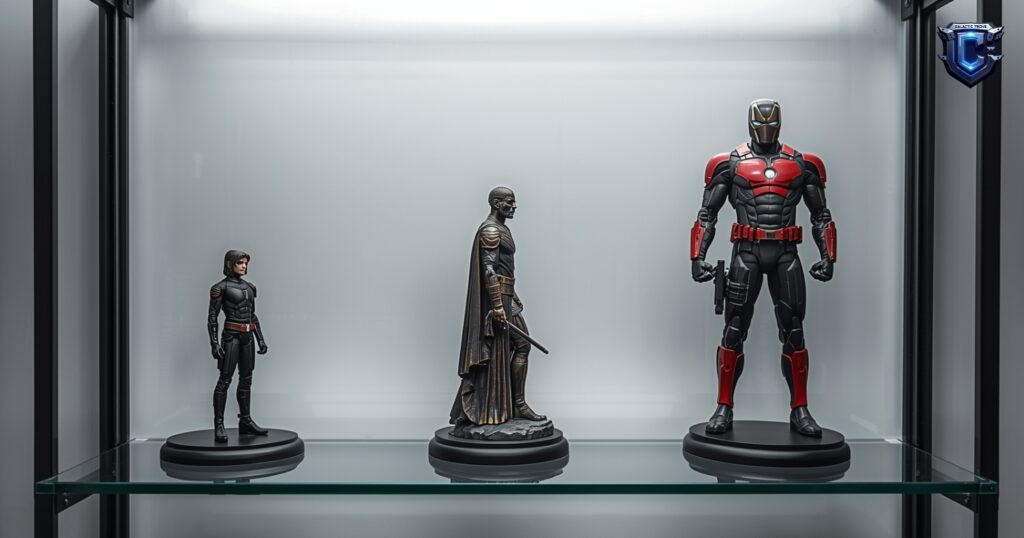
The core concept behind Model Scale Meaning is remarkably simple, yet often confusing due to the sheer volume of numbers used: Scale is a fraction, defining the relationship between the collectible and its real-world counterpart.
The formula is always: 1:X. Where X is the denominator representing how many times smaller the model is than the real object.
Example: 1:12 Scale. If a real human is 12 units tall (say, 12 feet), the figure is 1 unit tall (1 foot). A 6-foot tall character becomes a 6-inch (15.24 cm) figure.
The larger the denominator (X), the smaller the model. A 1:144 Gundam is vastly smaller than a 1:60 Gundam, even if they represent the same Mobile Suit.
1. Character Scale: From 1:1 to 1:12 (The Figure Fleet)
In the realm of Figures (Static and Action), collectors primarily deal with scales ranging from 1:1 (life-sized, typically props or busts) down to 1:12.
| Scale | Approximate Height (6ft Character) | Primary Use Case | Key Characteristics |
| 1:6 Scale | 12 inches (30 cm) | Premium Action Figures (Hot Toys, Sideshow) | High detail, mixed media (real fabric), high price point, massive visual presence. |
| 1:7 / 1:8 Scale | 8-10 inches (20-25 cm) | Japanese Static Figures (PVC, Resin) | Standard balance of detail, display efficiency, and moderate cost. |
| 1:12 Scale | 6 inches (15 cm) | Action Figures (Figma, S.H.Figuarts, Marvel Legends) | Dominant standard for poseability, high cross-compatibility between brands. |
1:6 Scale (The Premium Standard): Often called the “Hot Toys Scale.” At approximately 12 inches (30 cm) tall, this scale allows for incredible detail in clothing, accessories, and portrait sculpts. This size conveys high-end collectibility and is highly prized for its visual presence.- 1:7 and 1:8 Scale (The PVC Standard): The most common scale for Japanese Static Figures. These are slightly more affordable and easier to display than 1:6, typically standing around 8 to 10 inches tall. This is the sweet spot for balance between detail and display space efficiency.
- 1:12 Scale (The Action Standard): Synonymous with the popular 6-inch figure standard. This scale balances poseability, detail, and affordability, making it the most dominant scale for Articulated Figures globally.
2. Mecha/Vehicle Scale: From 1:100 to 1:60 (The Battle Titans)
For Model Kits and larger military vehicles, the Model Scale Meaning shifts dramatically to accommodate massive real-world objects.
- 1:144 Scale (The High Grade Standard): This is the most beginner-friendly and space-efficient scale for Gunpla (Gundam Model Kits). It makes a 60-foot mobile suit manageable on a desk. Its popularity is driven by accessibility and ease of collection.
- 1:100 Scale (The Master Grade Standard): A mid-range scale that allows for full internal frame detail, moving armor, and more complex engineering. It offers a perfect balance between size and technical complexity for builders. This scale often requires advanced Model Kit Tools for assembly.
- 1:60 Scale (The Perfect Grade Standard): Reserved for the most detailed, high-cost, and physically largest Model Kits. These are often over 12 inches tall and feature full LED compatibility, requiring significant display real estate and skill. This scale represents the pinnacle of Model Kit Engineering.
- 1:35 Scale: The foundational scale for Military Model Kits (tanks, infantry, jeeps). It’s standardized globally, ensuring a soldier from one company can stand next to a tank from another. This cross-compatibility is a primary driver for its continued use in diorama building.
II. Rule 2: The Critical Difference: Scale vs. Non-Scale (The Non-Scale Anomaly)
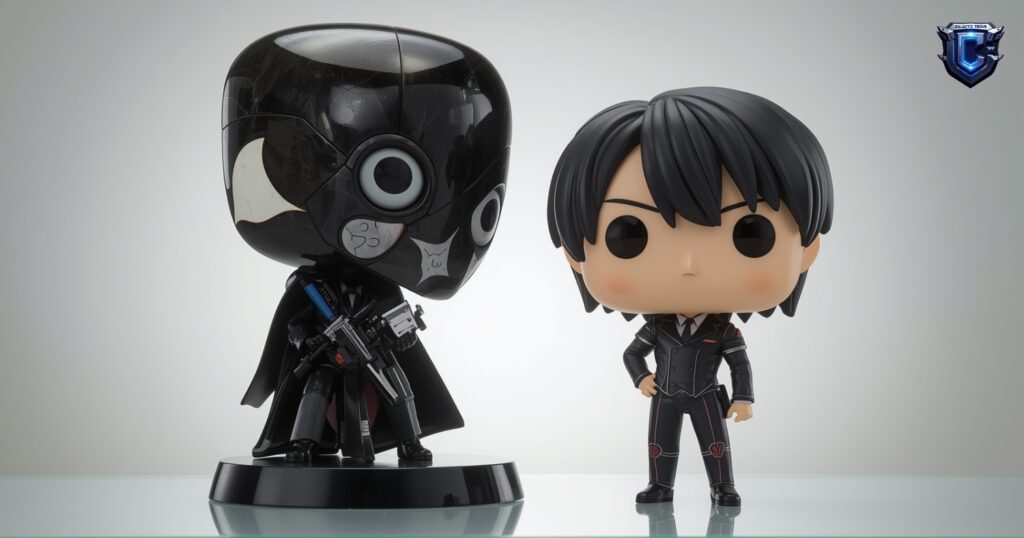
Not every collectible adheres to the strict fractional definition. Understanding the Non-Scale Anomaly is crucial for proper display planning. The Model Scale Meaning is abandoned here in favor of aesthetic uniformity and charm.
1. The Purpose of Non-Scale: Uniformity and Aesthetic Charm
Non-Scale Figures, such as Nendoroids, Funko Pops, and many stylized Chibi figures, have no direct proportional relationship to their real-world height.
- Nendoroids (Good Smile Company): The goal is to make all characters approximately 100mm (about 4 inches) tall, regardless of whether the character is a child, a giant robot, or a tall adult. The focus is on stylized uniformity and simplified, expressive features. They are an example of prioritizing Aesthetic Cohesion over mathematical accuracy.
- Funko Pops: These are standardized 3.75-inch vinyl figures. The common size allows them to be displayed en masse, side-by-side, regardless of the source material—a huge boon for Mass Collectors.
The lack of true scale means these figures should generally be displayed only with other Non-Scale Figures, as placing them next to a true-to-scale figure (like a 1:7 Static Figure) will immediately expose the dimensional inconsistency, creating a visual jarring known as Scale Clash.
2. Analyzing Relative Height and the “Scale Gap”
While Non-Scale Pieces disregard mathematical scale, they often maintain a subtle relative height difference. For instance, even in a Nendoroid line, a taller character may have slightly longer legs or taller accessories than a shorter character, maintaining visual hierarchy without breaking the aesthetic code. This subtle effort prevents the display from feeling completely flat, though it does not adhere to the strict Model Scale Meaning fraction. The key takeaway is: display by line/brand rather than by mathematical scale.
III. Rule 3: Standardization by Height (The 6-inch Action Figure Dominance)
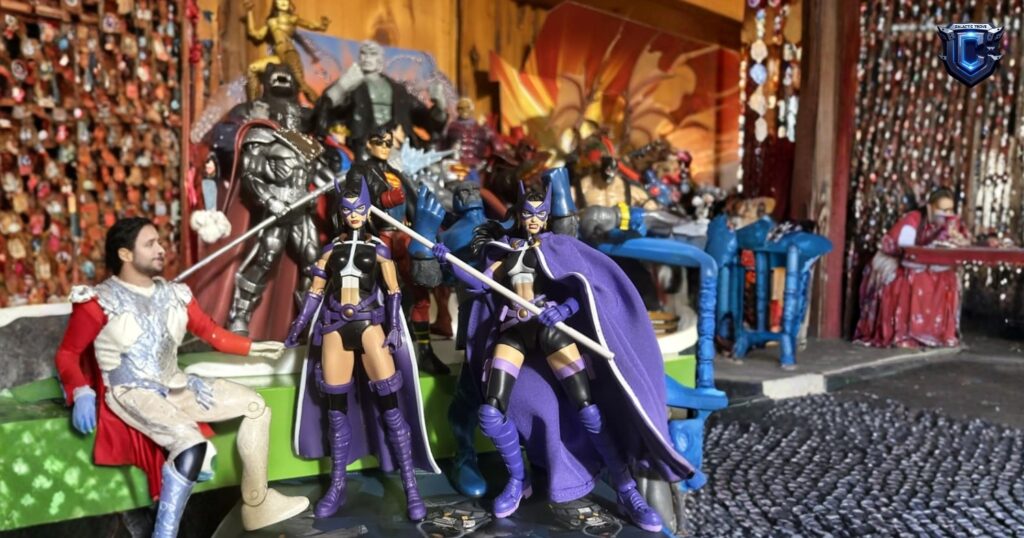
While fractional scales (1:12, 1:7) are mathematically precise, the market often defaults to imperial height standards for simplicity, especially for Action Figures. This is why the Model Scale Meaning can sometimes be expressed in inches rather than fractions.
1. The 6-inch Standard (1:12): Action Figure Dominance
The 6-inch figure (approximately 15 cm) is the dominant size for articulated figures worldwide. This size is manageable for play, allows for complex internal joints (often using ABS plastic for durability), and keeps the price point accessible.
- Key Players: S.H.Figuarts, Marvel Legends, DC Multiverse, and some lines from Mezco One:12 all generally operate within the 6-inch height range (which translates roughly to 1:12 scale for an average 6-foot adult).
- The Benefit of Standard: Collectors can buy figures from entirely different brands (Bandai, Hasbro, Mafex) and display them together seamlessly, knowing their relative heights will be generally consistent. This is a massive time-saver when strategizing the collection’s growth and maximizes Cross-Brand Display Potential.
2. The 1:35 Standard: The Military Model Kit Correlation
The 1:35 scale is the unchallenged king of Military Modeling. Its standardization is so rigid that virtually every Model Kit company, from Tamiya to Meng, produces tanks, artillery, and infantry figures in this exact proportion. This allows hobbyists to build historically accurate dioramas mixing products from dozens of different global suppliers. This uniformity is arguably the best real-world example of Model Scale Meaning driving an entire industry segment based on Historical Accuracy.
IV. Rule 4: Detail Density and the Scale Trade-off (The Cost of Miniaturization)
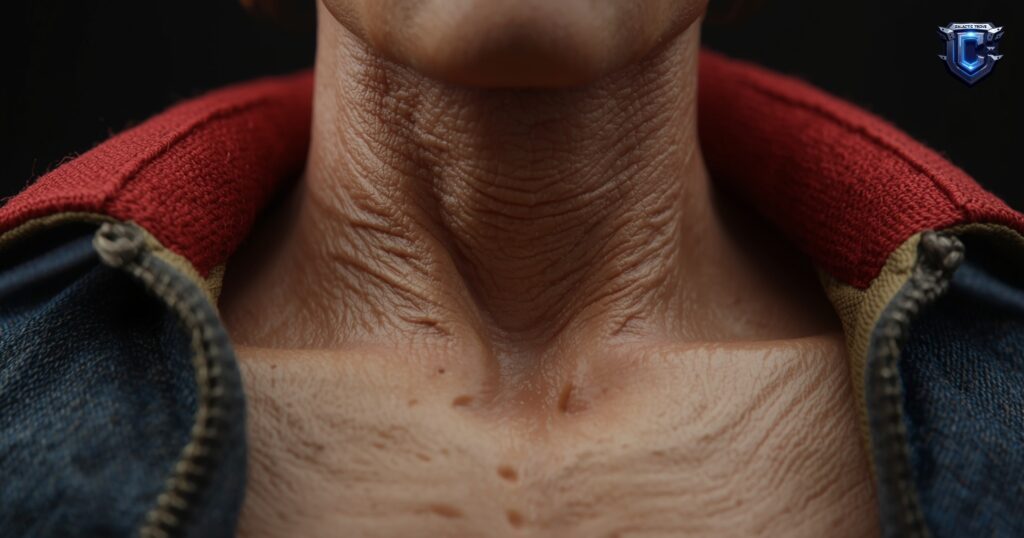
There is a direct correlation between the scale size and the density and fidelity of detail achievable. This is the Scale Trade-off—you trade size for complexity and cost. Understanding this relationship is vital for setting realistic expectations for your purchases.
1. Large Scale (e.g., 1:4 and 1:6): Hyper-Realistic Detailing
In larger scales, the amount of surface area is significantly greater, allowing sculptors and painters to add microscopic textures.
- Sculpting Focus: Artists can replicate the fine stitching of fabric, individual strands of hair, skin pores, and subtle vein structure. This attention to minute detail is what justifies the massive price tag of 1:4 and large 1:6 statues. The large surface area minimizes the visibility of typical manufacturing flaws.
- Material Focus: Larger figures often incorporate mixed media—real fabric clothing, leather belts, or metal chains—which are impossible to replicate convincingly on smaller figures. This makes the Model Scale Meaning critical for achieving true hyper-realism and justifying the price per detail point.
- (Note: The previous Vietnamese image tag has been updated to English: )
2. Small Scale (e.g., 1:144 and 1:72): Structural Priority
In smaller scales, the focus shifts from hyper-detail to structural integrity and core design language.
- Necessary Abstraction: Sculptors must abstract details. A tiny button on a 1:6 figure might be a sculpted bump; on a 1:144 figure, it might be represented by a simple, precise dot of paint or a slightly raised mold line. The detail is implied rather than explicitly carved.
- Engineering Focus: For small Model Kits, the challenge is not visual detail, but ensuring complex transformation or articulation can function without the plastic parts breaking under stress. For instance, the internal frame of a 1:144 Real Grade (RG) Gunpla is a marvel of miniaturized engineering, focusing on structural dynamics over visual texture. Understanding this is key to appreciating the engineering behind the Model Scale Meaning.
V. Rule 5: Scale Variance and Space Management (The Reality of the Display Shelf)
While the first four rules establish the ideal mathematical and industry standards, the fifth rule acknowledges the messy reality of collecting: Scale Variance and the constant battle for Space Management. No discussion of Model Scale Meaning is complete without addressing how these factors affect your collection strategy and long-term investment.
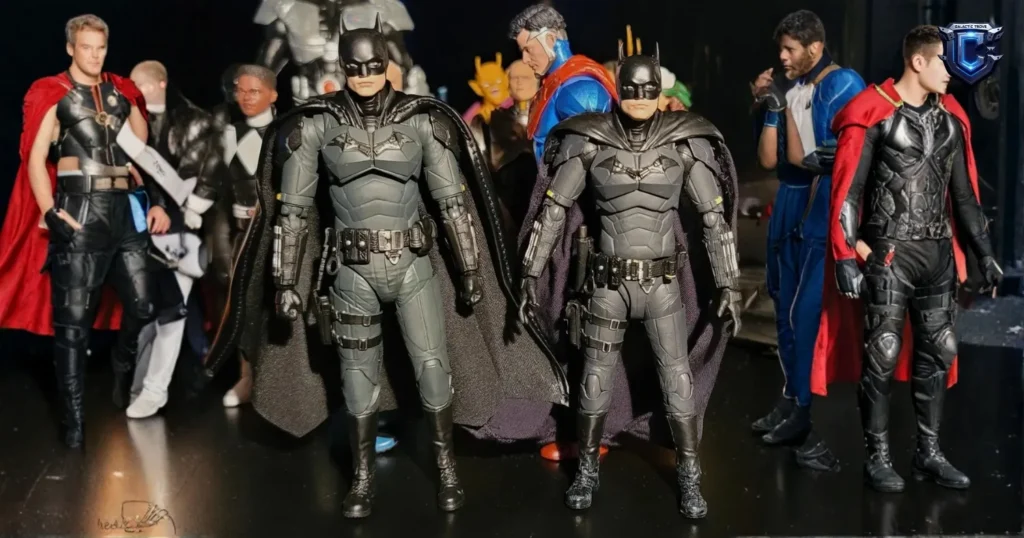
1. The Variance Conundrum: When 1:12 Doesn’t Mean 1:12
Scale is often interpreted loosely by manufacturers, especially when dealing with stylized properties like Anime or Comics where character height is inconsistent or exaggerated. This is where the mathematical purity of the fraction breaks down.
- Line Consistency vs. True Scale: Many lines, like certain Action Figure series, prioritize line consistency. This means all figures in the line are made to fit the same 6-inch blister pack, even if one character is supposed to be 9 feet tall (like a giant mech suit pilot) and another is 5 feet tall (like a young sidekick). The taller character is “scaled down” disproportionately to fit the line’s visual mandate.
- The “Actual Scale” Check: Rookies must learn to verify a model’s actual height in centimeters (cm) or inches (in) and compare it to the advertised scale. A “1:7” scale figure might be significantly shorter or taller than another brand’s “1:7” figure due to different artistic interpretations of the original source material’s height. This requires cross-referencing user reviews and specification lists before purchase.
2. Scale and Space Management: The Collector’s True Limiter
The larger the scale, the faster your display space evaporates. Scale is the primary predictor of how many items you can realistically own.
- The Footprint Factor: A 1:6 scale figure occupies not only height but also considerable depth and width on a shelf, limiting the number of adjacent pieces. Collecting 1:4 statues requires specialized, deep shelving and often means owning fewer than 10 pieces for an entire display cabinet.
- The 1:144 Advantage: This scale (High Grade Gunpla) is popular not just for affordability but because of its minimal footprint. Collectors can fit three to five 1:144 models in the space one 1:6 figure demands, maximizing variety within limited space. This is a strategic decision for collectors operating under Display Space Constraints.
- Storage and Preservation: Larger scales also present greater storage challenges. If you must put them away, the massive boxes and packaging consume exponentially more storage space. This ties into the long-term maintenance required for protecting your investment from elements like dust and UV exposure (a critical consideration for all Master Collectors).
3. The Diorama Builder’s Mandate (Advanced Application)
For collectors building dioramas (scenes involving multiple figures/vehicles), the adherence to true scale is paramount.
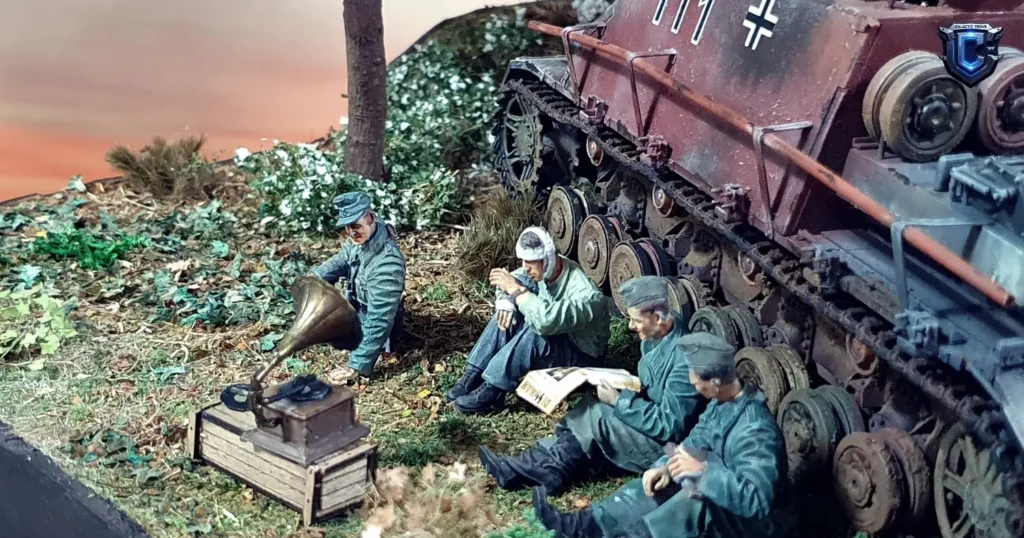
- Perspective and Realism: A diorama loses all sense of realism if a 1:35 tank is placed next to an out-of-scale soldier. Diorama builders strictly adhere to the Model Scale Meaning to maintain visual consistency and depth of field.
- Mixed Media Integration: They must ensure that all elements—from the tiny 1:35 tree to the painted foam ground and the vehicle—are sourced or crafted to the exact same scale, proving that Scale Cohesion is the final layer of realism.
VI. Final Briefing: Strategizing Your Display with Scale (The Cohesive Fleet)
Your ultimate goal, Rookie, is to create a display that showcases the beauty and uniformity of your fleet. Understanding the Model Scale Meaning is the strategic key to achieving this. This knowledge prevents the rookie mistake of mixing scales and destroying your collection’s visual appeal.
The Golden Rule of Cohesion:
Always try to collect figures of a single type (e.g., Action Figures) within one or two similar scales (e.g., 1:12 and 1:10). Mixing a 1:4 statue next to a 1:144 robot will destroy the visual coherence of your cabinet and make the collection look disjointed.
- Dedicated Scale Zones: The most experienced collectors dedicate specific shelves or even cabinets to specific scales (e.g., “The 1:6 Premium Shelf,” “The 1:12 Action Diorama,” “The 1:100 Gunpla Bay”). This separation optimizes the visual impact of each piece and demonstrates Strategic Collection Management.
- The Exception: Non-Scale: Non-Scale Figures (like Nendoroids) should always be grouped with other Non-Scale figures. Their standardized height makes them look best together, creating a unified wall of aesthetic charm, separate from the mathematically defined scales.
Mastering the Model Scale Meaning is not just about knowing numbers; it’s about making deliberate choices that enhance the value, quality, and visual narrative of your entire collection. Now go forth, Space Cadet, and assemble a cohesive fleet!Final CTA: Now that you know the rules, look at your shelf. Which scale currently dominates your collection, and what is the biggest Scale Clash you’ve made so far? Share your next strategic purchase below!

- Best Detolf Alternatives 2026: 8 Cases That Elevate Your Jaegers - November 30, 2025
- Best Transformers Action Figures 2026: Only 7 Didn’t Make Me Want to Sell a Kidney - November 26, 2025
- The Benefits and Risks of Collecting Limited Edition Models in 2026 - November 23, 2025